Composite Bonding vs Veneers: Why More Patients Are Rethinking Their Options in 2026

Five years ago, the debate around composite bonding vs veneers barely registered outside a dental surgery. Today it is the single most common cosmetic dentistry question patients bring to their first consultation. Something fundamental has shifted, and it goes far beyond a trend.
Social media played a role nobody expected. Many patients who flew abroad for cheap porcelain veneers are now sharing their regret stories openly. The term “Turkey teeth” has become shorthand for a cautionary tale about irreversible treatments chosen too quickly. That cultural reckoning has made UK patients far more cautious, far more informed, and far more interested in treatments that leave their options open.
Reversibility is now a deciding factor in a way it never was before. Patients want to know what happens if they change their mind, what happens in ten years, and whether their natural teeth will still be intact underneath. These are smart questions, and they deserve honest answers. This guide walks you through the real differences between composite bonding and porcelain veneers, with transparent pricing, genuine clinical insight, and a clear framework to help you choose the right treatment for your smile.
Composite Bonding vs Veneers on Cost, Longevity, and Reversibility
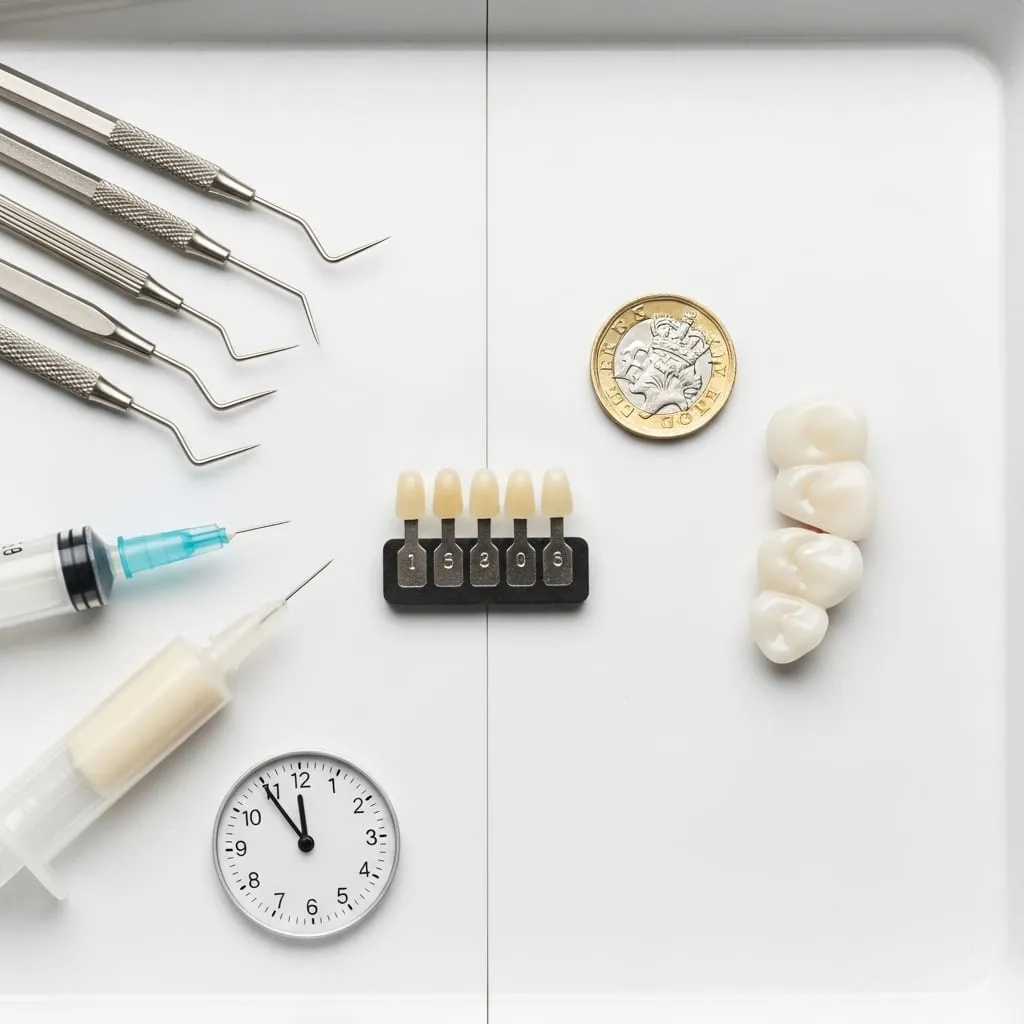
When patients weigh up composite bonding vs veneers, cost is usually the first thing on their minds. Porcelain veneers usually cost more per tooth than composite bonding, depending on the complexity and the ceramics used; see our fees page for current prices. For a full smile makeover covering six to ten teeth, that gap becomes significant.
Cost alone, however, tells a partial story. Composite bonding lasts between five and seven years with proper care, while porcelain veneers can last ten to fifteen years or longer. When you calculate the cost per year of wear, the gap narrows. Neither is dramatically cheaper over a lifetime.
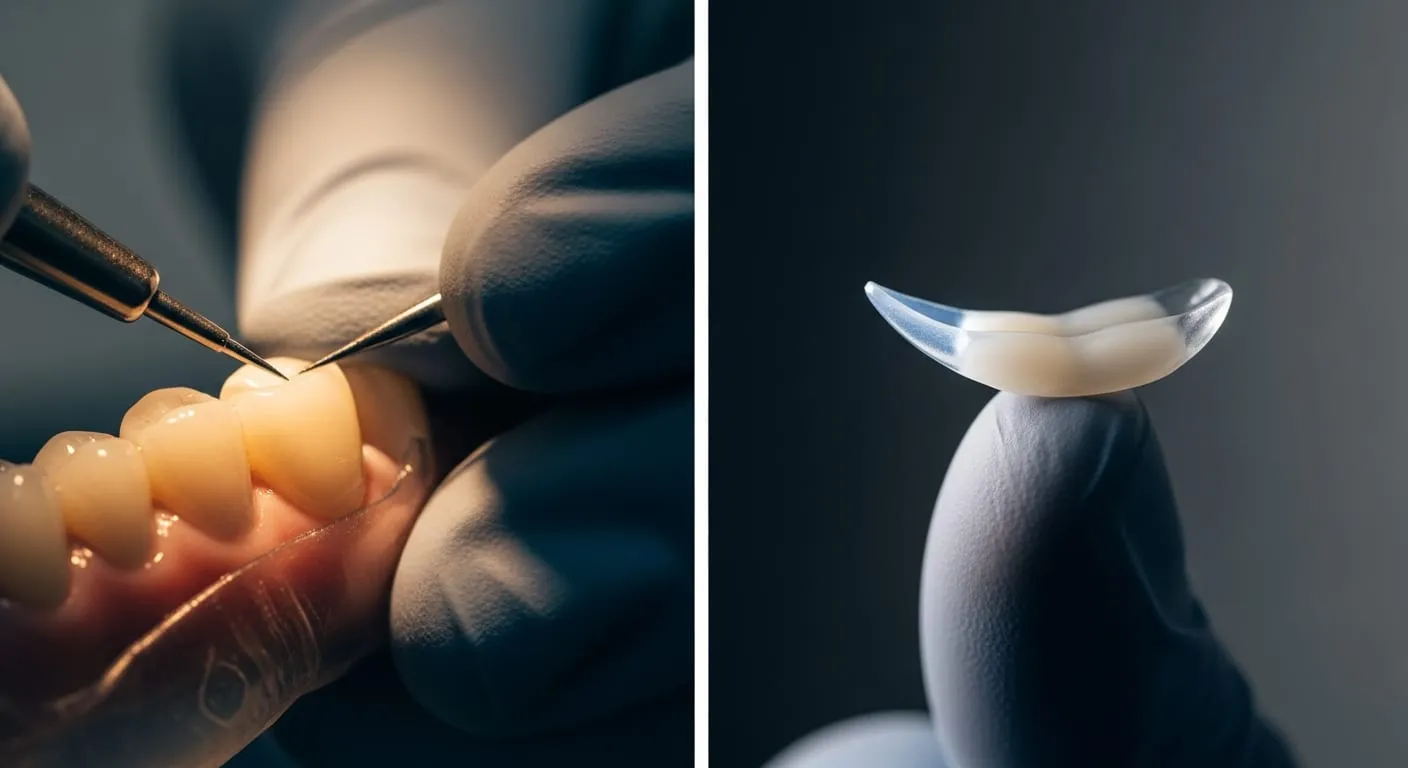
The real dividing line in the composite bonding vs veneers conversation is reversibility. Composite bonding is applied directly to the natural tooth surface with little or no enamel removal. If you decide to have it removed years later, your tooth is essentially unchanged. Porcelain veneers require a thin layer of enamel to be filed away before the veneer is bonded permanently, as official UK health guidance on dental treatments notes. Once that enamel is gone, it does not grow back. This is a one way decision.
Stain resistance favours porcelain. The glazed ceramic surface repels coffee, red wine, and tea far better than composite resin, which can pick up discolouration over time. The trade off is that composite bonding can be polished, repaired, or topped up in a single chairside appointment. A chipped porcelain veneer usually means a full replacement.
Treatment time differs too. Composite bonding is completed in a single visit, often within an hour. Porcelain veneers require at least two appointments, with a laboratory fabrication stage in between. For busy professionals in Central London, that practical difference matters. Maintenance for both treatments is straightforward: regular hygiene appointments, avoiding biting hard objects, and for composite bonding specifically, periodic polishing to maintain the finish.
Who Is Each Treatment Right For? A Candid Look at Candidacy and Combination Care

The question of composite bonding vs veneers is really a question about you, not just your teeth.
Composite bonding suits you brilliantly if your concerns are minor. A chipped incisor, a small gap between your front teeth, mild discolouration that whitening has not shifted. It is also the smarter starting point for younger patients whose smiles are still changing, and for anyone who wants meaningful results without a significant financial commitment. The reversible nature of bonding matters here too. If your needs change in a few years, your options remain open.
Porcelain veneers make more sense when the canvas needs more work. Severe staining from tetracycline or fluorosis, teeth that are noticeably uneven in shape or length, or a smile that has always felt slightly off but you could not explain why. Veneers are a longer term investment, and people who choose them tend to be ready to commit to that relationship.
Then there are cases where neither treatment belongs on the table yet. Active gum disease, untreated bruxism, and severely insufficient enamel are all contraindications. These are not obstacles forever, but they must be addressed first. Placing veneers over unhealthy foundations is like painting over damp walls. It looks good for a moment, then it does not.
One approach that surprises many people is the combination pathway. A thorough smile makeover might include porcelain veneers on the most visible upper teeth and composite bonding on the lower or less prominent ones. This balances aesthetics with cost and preserves more tooth structure overall.
Before any decision is made, digital smile design lets you preview your outcome on screen. You see the shape, proportions, and colour before a single tooth is touched. None of this replaces a personalised consultation with a cosmetic dentist in Paddington, but it gives you the language to walk in knowing exactly what to ask.
Making the Right Choice for Your Smile at Paddington Smiles
The composite bonding vs veneers decision does not need to feel overwhelming. When you strip it back, the framework is refreshingly simple. Choose composite bonding if your concerns are cosmetically minor, you value reversibility, you prefer a single appointment, or you want a lower upfront cost. Choose porcelain veneers if you are looking for a longer lasting transformation, your teeth need more significant reshaping, or stain resistance matters to you.
Both are excellent treatments. Neither is inherently better. The right one depends entirely on your teeth, your goals, and your lifestyle. That is exactly why a face to face conversation with a clinician who understands both options matters so much.
“A good cosmetic result always starts with an honest conversation. We never recommend a treatment because it costs more or looks impressive on a screen. We recommend what genuinely serves the patient sitting in front of us, and sometimes that means suggesting the simpler option first.”
DR PEDRO GUTIERRES, Lead Clinician, Paddington Smiles
At Paddington Smiles, every cosmetic dentistry journey in London begins with a consultation. No pressure, no obligation, just a calm, transparent conversation about what is realistic, what each option involves, and which path suits you. If you have been weighing up composite bonding vs veneers and want clarity from a team that genuinely puts patients first, book your consultation today.