Root Canal vs Implant: The Decision Starts With Whether the Tooth Can Be Saved
When you are comparing root canal vs implant treatment, the real question is not which option sounds more advanced, but whether your natural tooth can be saved with confidence. For London patients with a cracked, painful or infected tooth, this decision should start with diagnosis: how far the crack extends, whether infection can be controlled, how much healthy tooth remains, and whether the tooth can be predictably restored with a crown.
At Paddington Smiles, a root canal or implant conversation is guided by what we call the Saveability Test. Your dentist assesses infection control, crack depth, remaining tooth structure, gum and bone support, crown restorability and long-term predictability. If the tooth is biologically healthy enough and structurally strong enough, preserving it may be the most conservative choice. If it is split below the gum, repeatedly infected, loose, or too weak to support a lasting restoration, replacing it with an implant may offer a more stable outcome.
This matters because the choice to save tooth or implant affects comfort, cost, treatment time, appearance and anxiety. A well-planned root canal treatment in Paddington can relieve pain and keep your own tooth in place, while an implant can replace a tooth that no longer has a dependable future. Neither answer should be automatic.
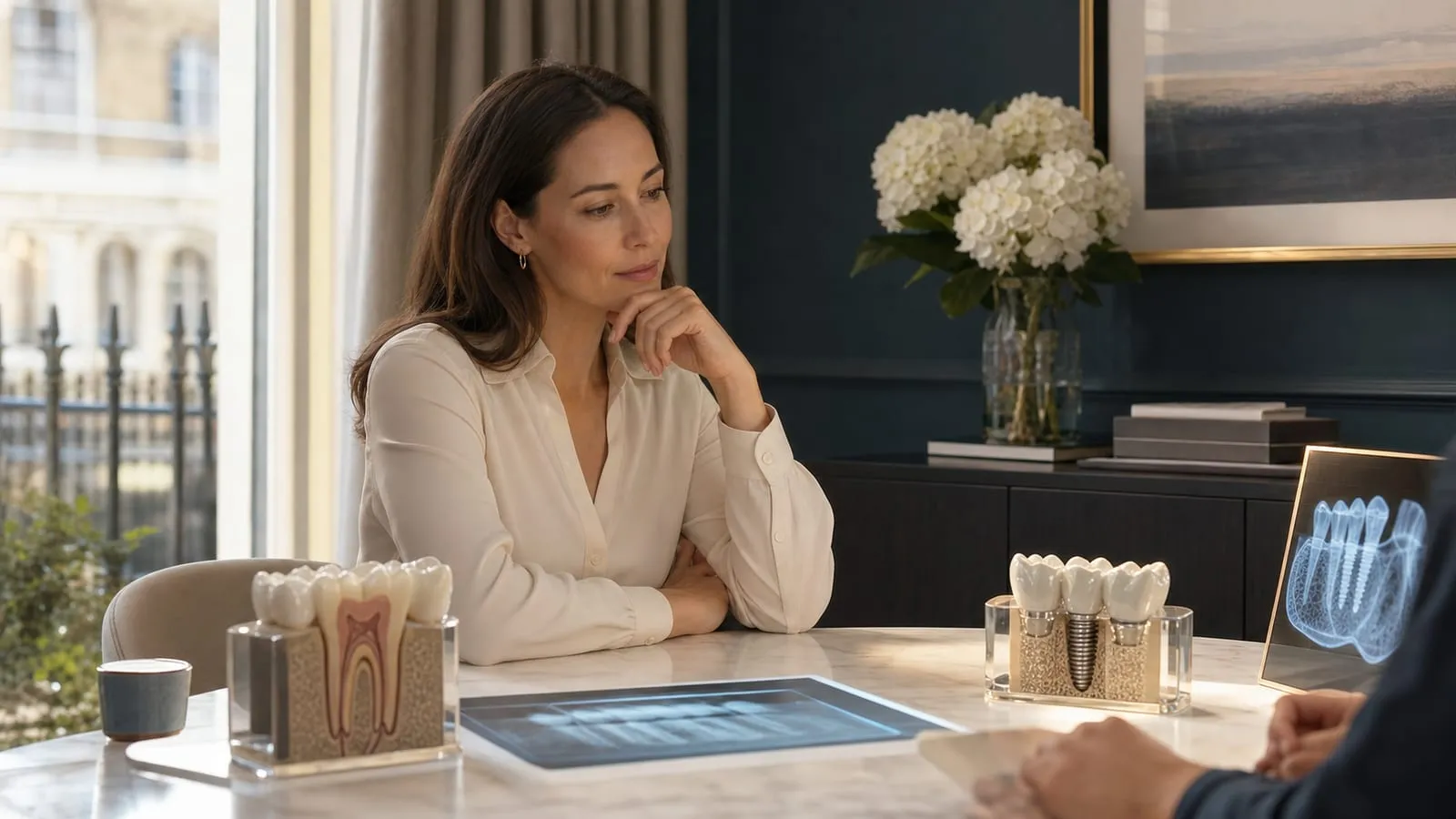
In our calm Central London studio, we use 3D imaging, digital scans and personalised treatment planning to explain the findings clearly. If you are wondering can a cracked tooth be saved, or need a root canal consultation Paddington patients can access, our team will help you compare root canal vs implant options with clarity and reassurance.
The Saveability Test: When Root Canal Treatment and a Crown May Still Work
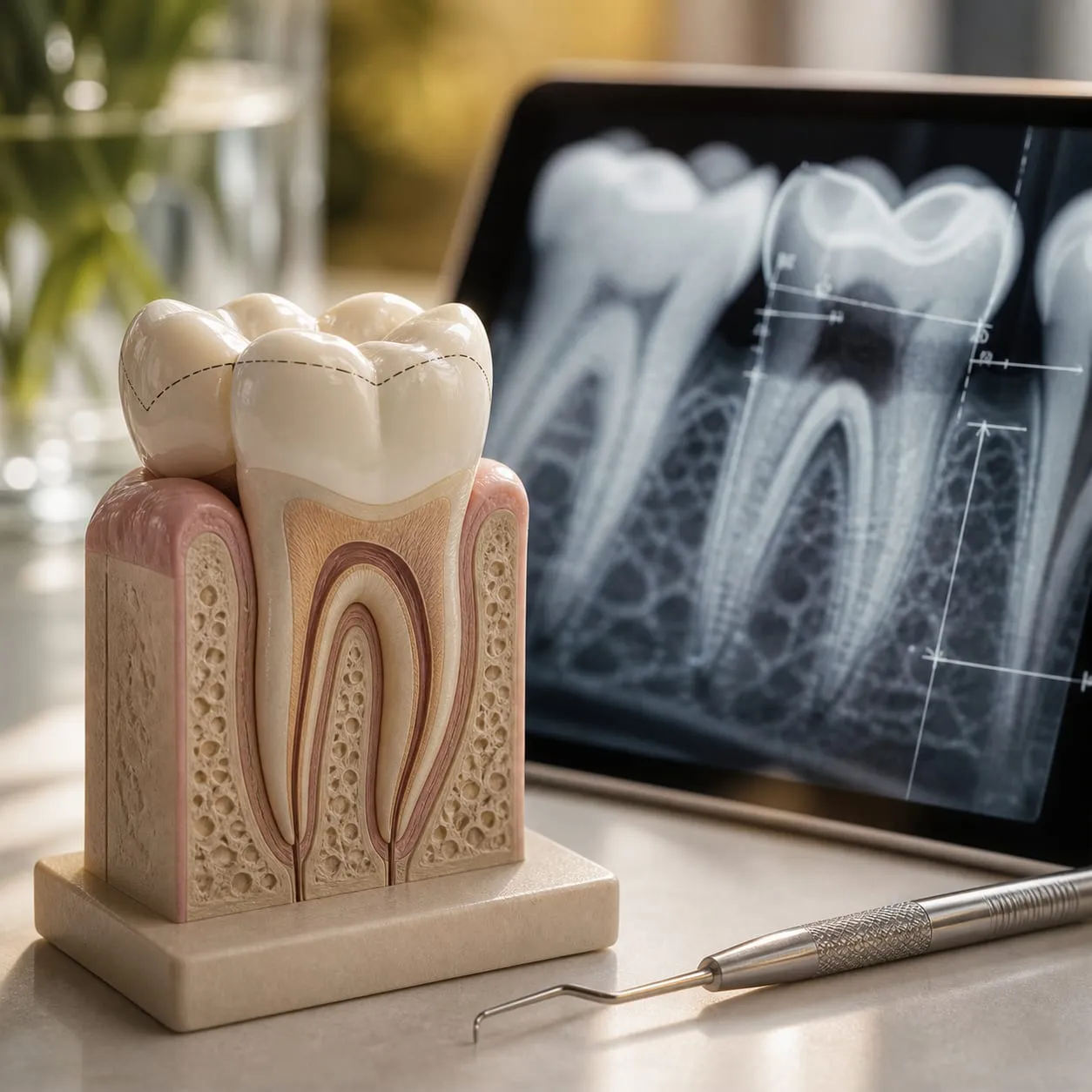
The saveability test asks a practical question: can the tooth be made healthy, comfortable and strong enough to function predictably? Root canal treatment is designed for teeth where the pulp has become infected or irreversibly inflamed, often because of deep decay, trauma, a leaking restoration or a crack that has reached the nerve. In many cases, an infected tooth root canal or extraction decision is not automatic. If the root, surrounding bone and remaining tooth structure are sound enough, saving the natural tooth may still be the most conservative choice.
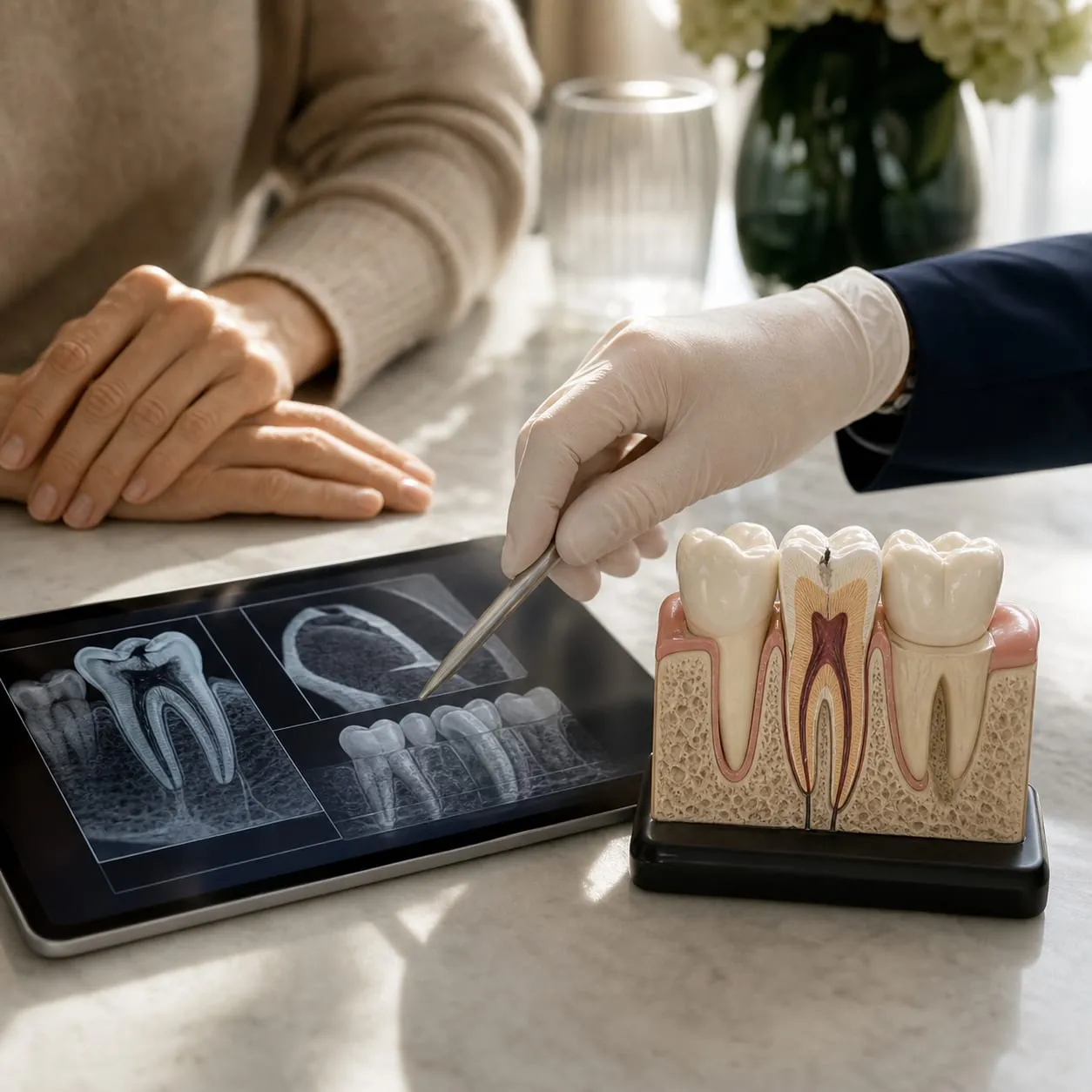
At Paddington Smiles, assessment begins with a careful examination, bite tests, X-rays and, where appropriate, 3D imaging and digital scanning. A periodontal assessment is also important because advanced gum disease can make an otherwise treatable tooth less predictable. These checks help answer questions patients often search for, such as when is a tooth too damaged for root canal, or whether a cracked tooth root canal or implant plan is more realistic.
Signs that favour saving include roots without a vertical split, enough remaining tooth above the gum to rebuild, infection that can be cleaned and sealed, and stable gum support. Crack direction and depth matter. A crack running across a cusp or into the pulp may sometimes be restored after root canal treatment. A vertical root fracture, especially one extending down the root, is usually unsuitable because bacteria can continue to track along the split.
Back teeth commonly need a crown after treatment because they take heavy chewing forces and are often weakened by decay or large fillings. The aim is not only to remove infection, but to protect the tooth from future fracture. This is why discussions about root canal and crown vs implant should include the final restoration, not just the root canal itself. For patients comparing root canal vs implant, the key advantage of saving the tooth is keeping the natural root, ligament and bite sensation, provided the prognosis is reasonable.
There are limits. Very poor tooth structure, deep cracks, advanced gum disease, repeated infection after previous treatment or an unrestorable margin may shift the balance towards removal and replacement. In those cases, root canal vs implant becomes a planning conversation rather than a simple preference. A transparent consultation, including root canal cost UK private considerations, helps patients weigh comfort, longevity, appearance and future maintenance. For suitable teeth, UK health guidance on root canal treatment explains how infected tissue is removed before the tooth is sealed.
Root Canal vs Implant Cost UK, Timelines and Long-Term Predictability
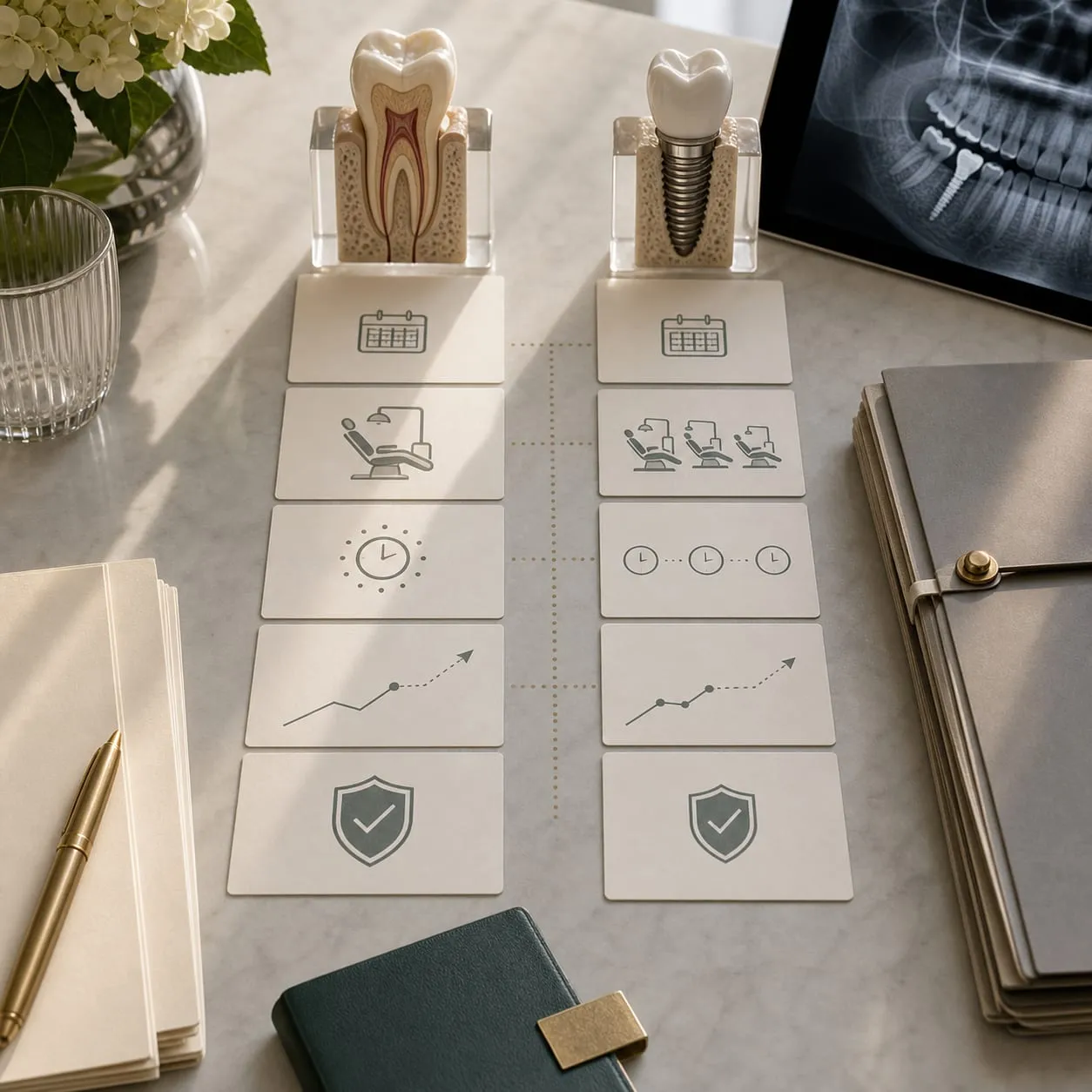
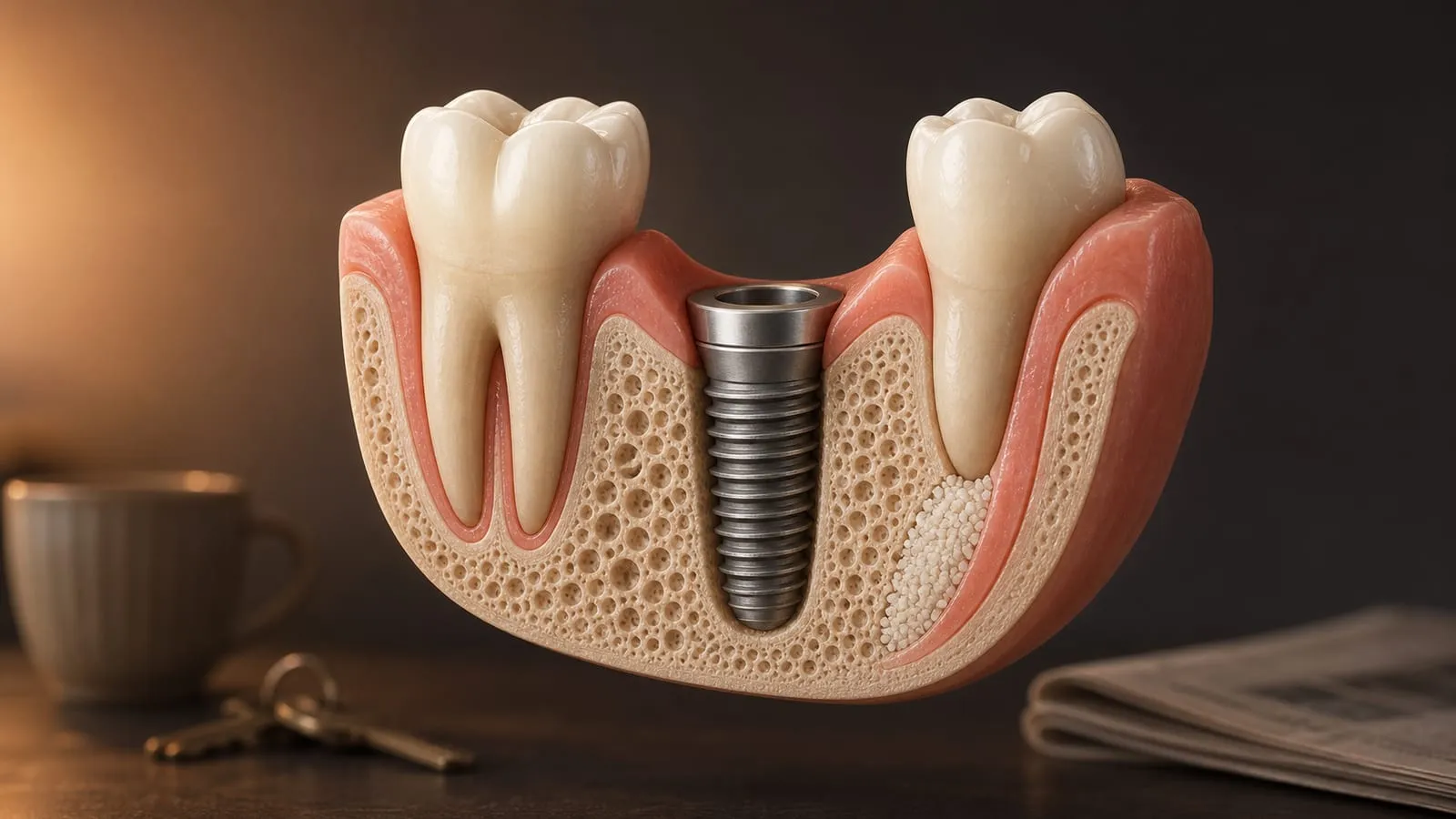
For many patients, the root canal vs implant decision comes down to whether the natural tooth can predictably be saved. A root canal removes infection from inside the tooth, then usually needs a crown for strength. An implant replaces a tooth after extraction with a titanium fixture, healing period and final crown.
| Question | Root canal and crown | Extraction and single implant |
|---|---|---|
| Typical cost | Often lower, but varies with molars, retreatment, specialist endodontics and crown material. | Usually higher. Single tooth implant cost UK fees vary with 3D scans, grafting, sedation, components and aftercare. |
| Appointments | Assessment, canal treatment, review and crown. | Assessment, extraction, implant placement, healing, digital scan and crown. |
| Healing time | Limited gum healing, although tenderness can last a few days. | Surgical healing commonly takes several months before the final crown. |
| Predictability | Good when enough healthy tooth remains and cracks are not severe. | Predictable when a tooth cannot be saved, but it is a surgical replacement. |
In private London care, root canal vs dental implant fees also reflect clinician experience, imaging, materials, laboratory quality, appointment length and sedation choices. At Paddington Smiles, planning may include 3D imaging and digital scanning, with options explained during a personalised consultation for dental implants in Paddington.
A failed root canal or implant is managed differently. A failed root canal may be retreated, referred to a specialist, treated surgically at the root tip, or extracted. If an implant fails, the site may need removal, healing, bone grafting and later replacement. The right answer to root canal vs extraction and implant depends on restorability, bite forces, gum health, medical history and your priorities for time, cost and long-term maintenance.
Choosing Root Canal or Implant in Paddington: What to Ask Before Treatment
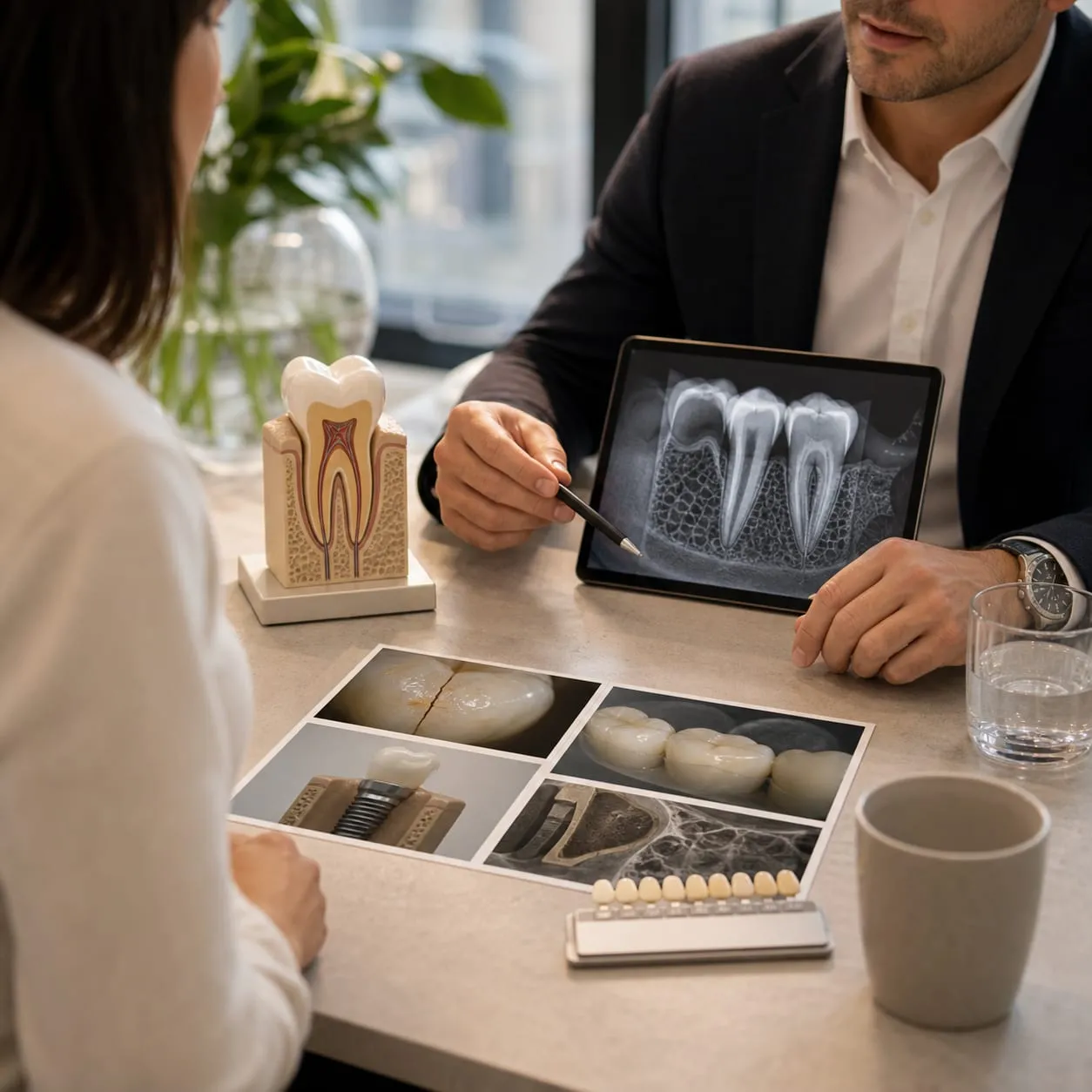
Choosing between root canal or implant should start with diagnosis, not guesswork. In a root canal vs implant discussion, the most suitable answer is usually the one that gives you the most predictable, healthy result over time. If the tooth can be cleaned, sealed and restored with enough remaining structure for a crown, saving it may be the most conservative option. If there is a deep fracture, severe bone loss, repeated infection or too little tooth left to protect, replacement may offer a clearer long-term plan.
Useful questions for your consultation include:
- Is there a crack below the gum line?
- Is there enough sound tooth for a crown?
- How much bone has been lost around the tooth?
- What is the risk of reinfection after treatment?
- If the first option fails, what would happen next?
At Paddington Smiles, your consultation is designed to make these answers clear. The team offers initial consultations, 3D imaging, digital scanning, sedation options and multilingual clinicians, so anxious patients can understand their choices at a comfortable pace. Implant planning is led by Dr Pedro Gutierres, whose advanced implant experience supports careful assessment when a tooth cannot predictably be saved.
If you are weighing save tooth or implant options, or need an emergency dentist because pain or swelling has started, arrange a root canal consultation Paddington patients can use to compare both pathways. The right choice is not the fastest one, but the one with a realistic prognosis, clear costs and a plan you feel ready to begin.